Statistical note
Bootstrap and permutation inference
Resampling distributions, confidence intervals, permutation p-values, exchangeability, and custom image-analysis statistics.
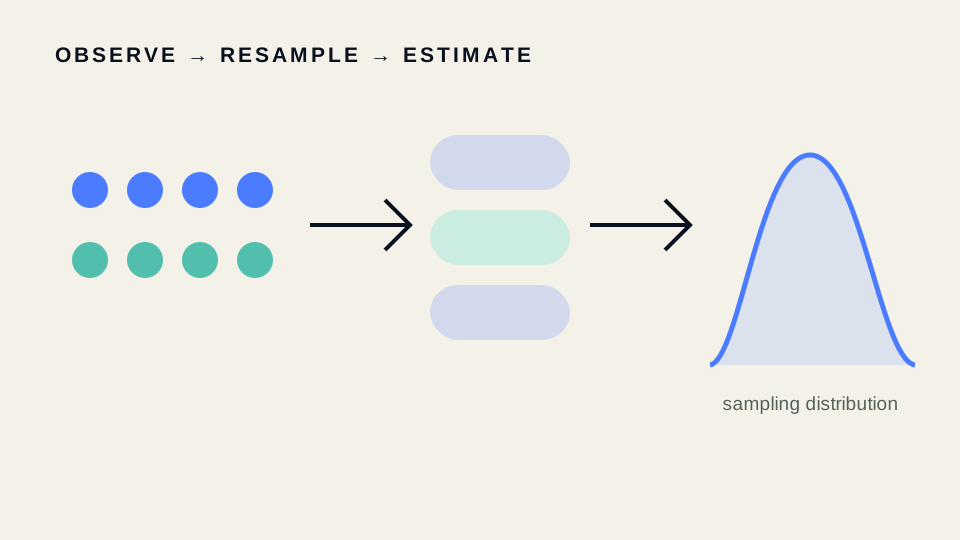
The bootstrap approximates the sampling distribution of an estimator by repeatedly resampling observed units with replacement. A permutation test approximates a null distribution by rearranging labels in ways justified by exchangeability.
import numpy as np
from scipy import stats

control = np.array([8.1, 8.4, 8.0, 8.7, 8.3])
treated = np.array([9.0, 9.4, 8.8, 9.5, 9.1])

ci = stats.bootstrap((treated,), np.mean, n_resamples=20_000, rng=42)
print(ci.confidence_interval)

def mean_difference(x, y, axis=0):
    return np.mean(x, axis=axis) - np.mean(y, axis=axis)

test = stats.permutation_test(
    (treated, control), mean_difference,
    permutation_type="independent", n_resamples=20_000, rng=42,
)
print(test.statistic, test.pvalue)
Mathematics
The empirical bootstrap distribution approximates uncertainty in . Monte Carlo error decreases only as , so reproducible random generators and sufficient resamples matter.
Case study: median cell response
Resample independent experiments or donors, not individual cells pooled across experiments, when biological replicates define sampling uncertainty. Cluster bootstrap methods may be needed for nested images.
Functions: scipy.stats.bootstrap, permutation_test, monte_carlo_test, and power.
For bootstrap replicates drawn from the empirical distribution,
Continue through the concepts
Related notes
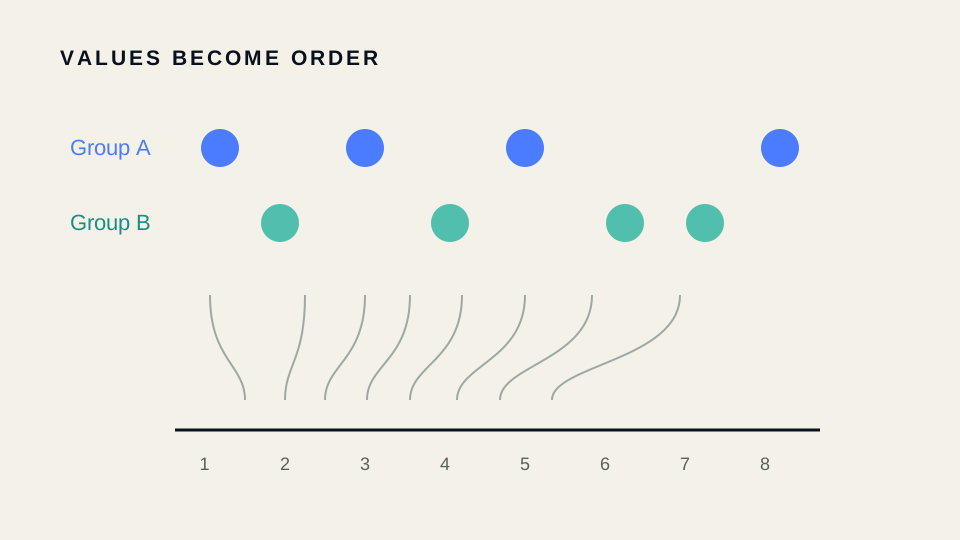 Non-parametric tests: what they do and do not test
A guide to rank-based methods, permutation tests, distributional assumptions, and interpretation beyond the median myth.
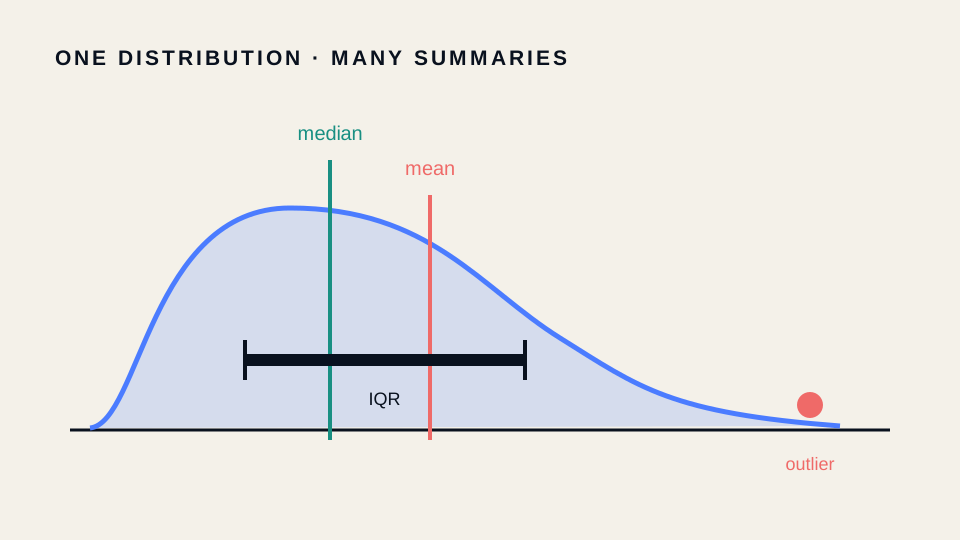 Descriptive and robust statistics with SciPy
Mean, median, variance, IQR, MAD, skewness, and kurtosis: what each summary measures and when it can mislead.
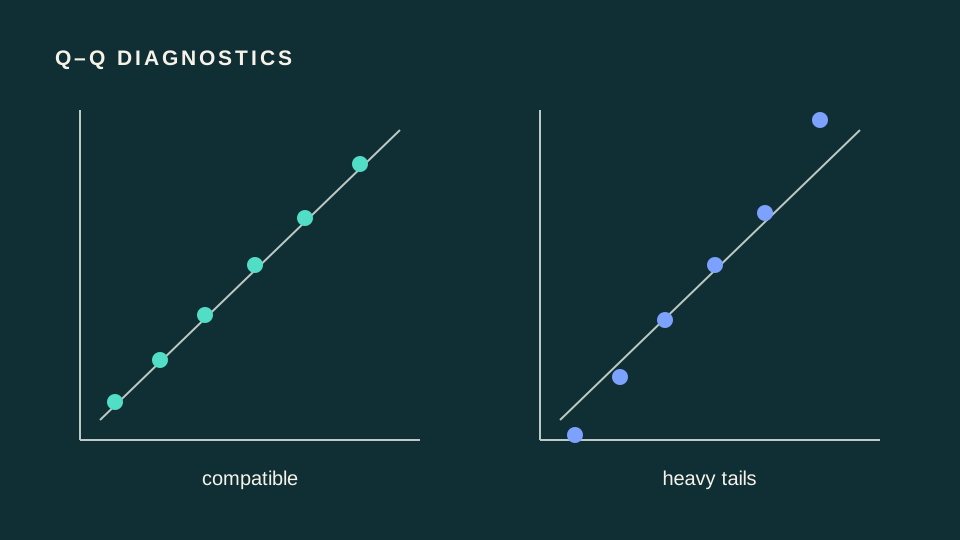 Normality and goodness-of-fit diagnostics
Shapiro–Wilk, D’Agostino–Pearson, Anderson–Darling, Q–Q thinking, and why testing normality is not a checkbox.
 Correlation: Pearson, Spearman, and Kendall
Linear, monotonic, and concordance-based association, with confidence intervals and microscopy examples.