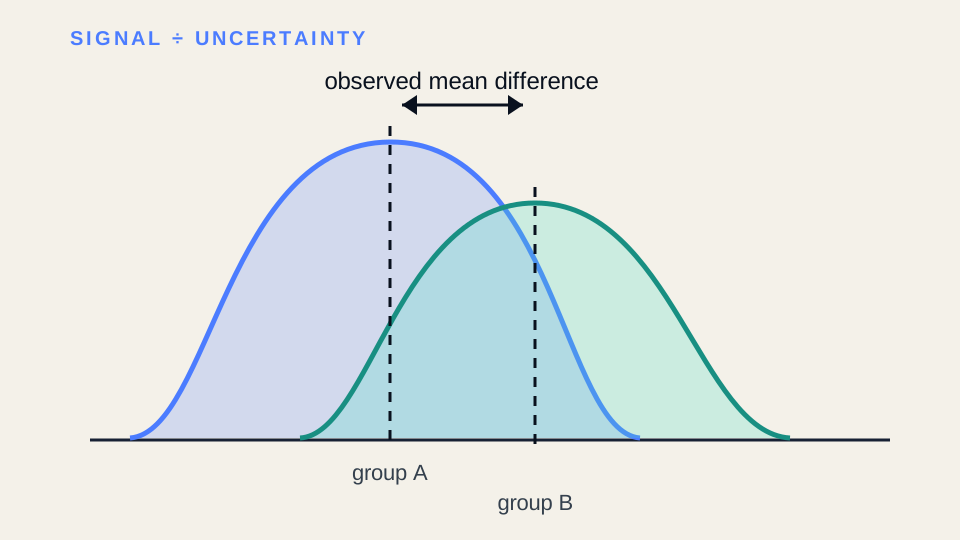
The t-test: comparing means with uncertainty
A practical guide to one-sample, paired, and independent t-tests, their assumptions, and responsible interpretation.
Read the latest noteIngénieur Informatique at Phasics
I develop computer-vision and image-processing methods for biological microscopy, from fluorescence and TIRF imaging to label-free quantitative phase imaging.
Currently based in Paris, France
A personal reflection
The universe is full of hidden structure. What we call randomness is often a pattern awaiting discovery. When we shift our perspective and pursue truth with clarity, the world reveals itself in unexpected ways.
A short biography

I am Chandrasekar SUBRAMANI NARAYANA, an Ingénieur Informatique at Phasics in Paris, France. I work on computer vision and image processing for microscopy, with a current focus on quantitative phase imaging.
I completed my PhD in Biophysics at Aix–Marseille University in September 2025. My doctoral research combined fluorescence and TIRF microscopy, deep-learning density maps, bacteriophage counting, and quantitative models of molecular binding.
Across research and engineering, I aim to build methods that are scientifically interpretable, reproducible, and useful beyond a single dataset.
Read my full storyNews
Short, dated notes on milestones, collaborations, and methods.
Career
Beginning a new chapter in Paris, working at the intersection of software engineering and optical measurement.
Milestone
A milestone at the intersection of deep learning, single-particle microscopy, and molecular kinetics.
Collaboration
New work on spectral fingerprints, chemical mixtures, and practical oil authentication.
Methods
A comparative study of how data representations influence robustness and generalisation.
Notes
Illustrated explanations of statistics, image analysis, and scientific reasoning.
A practical guide to one-sample, paired, and independent t-tests, their assumptions, and responsible interpretation.
Read the latest noteMore from the notebook
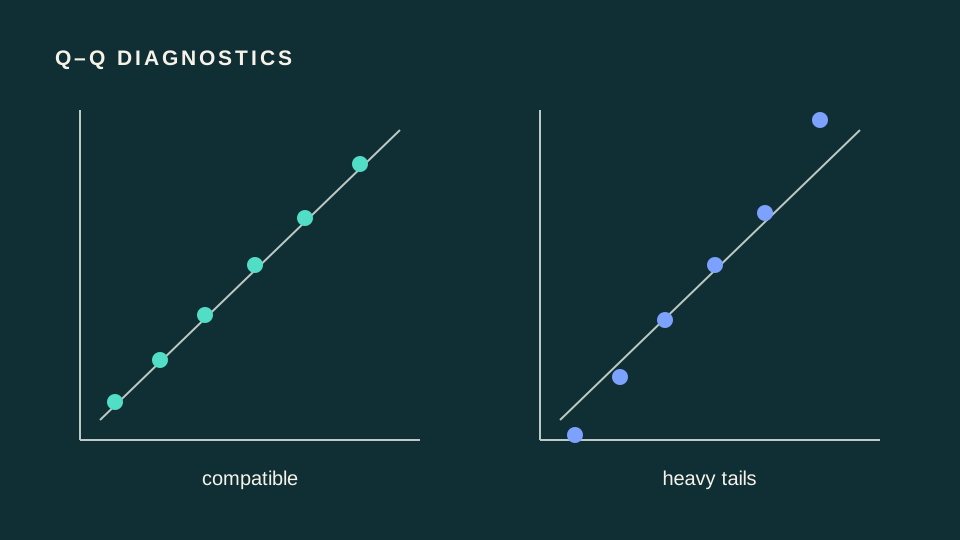
A reference-level guide to shewhart control charts: theory, assumptions, diagnostics, worked bioimaging analysis, exercises, and reporting.
Open note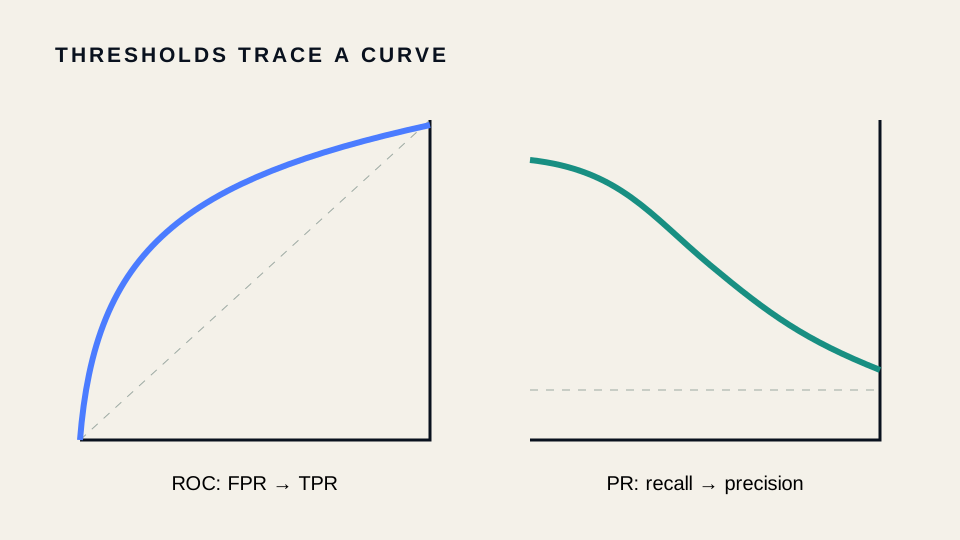
A reference-level guide to alpha-spending functions: theory, assumptions, diagnostics, worked bioimaging analysis, exercises, and reporting.
Open note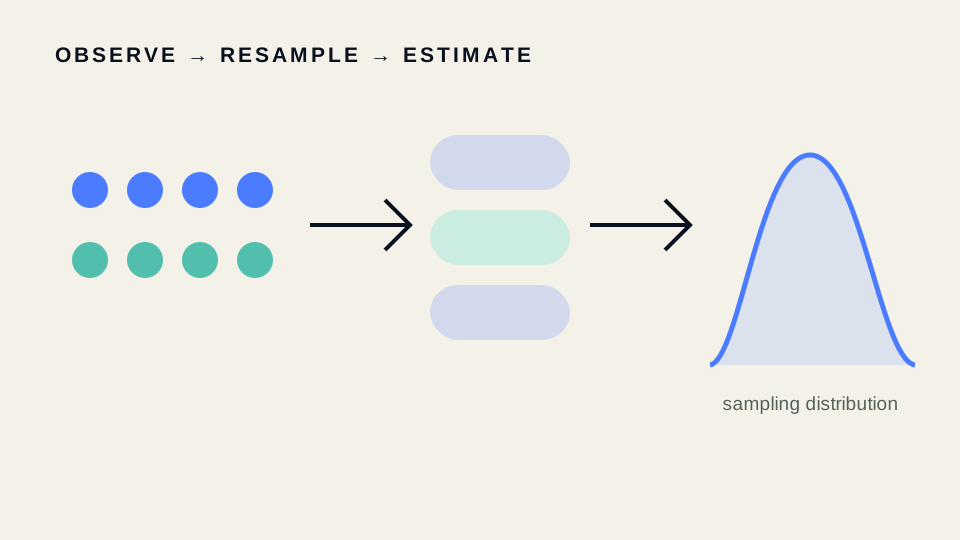
Resampling distributions, confidence intervals, permutation p-values, exchangeability, and custom image-analysis statistics.
Open note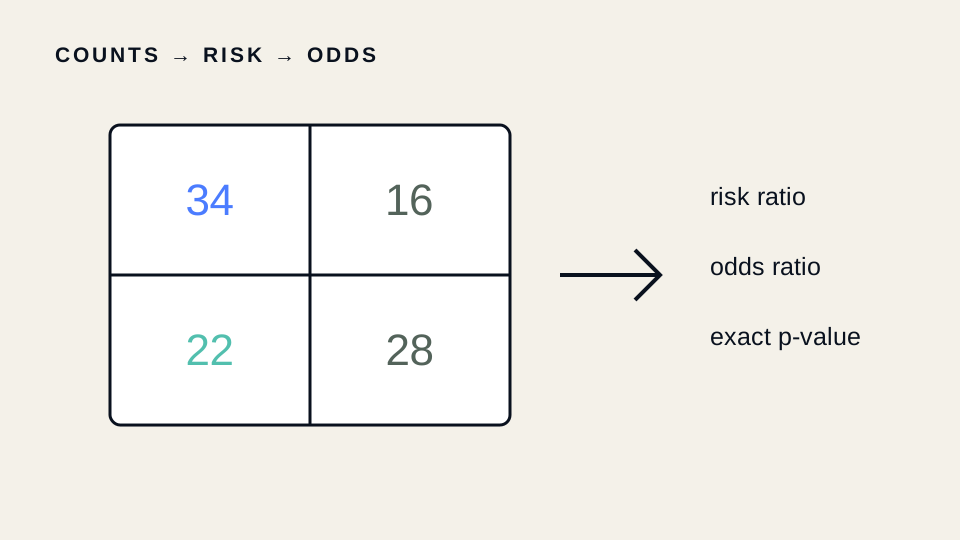
A reference-level guide to zero-inflated poisson models: theory, assumptions, diagnostics, worked bioimaging analysis, exercises, and reporting.
Open note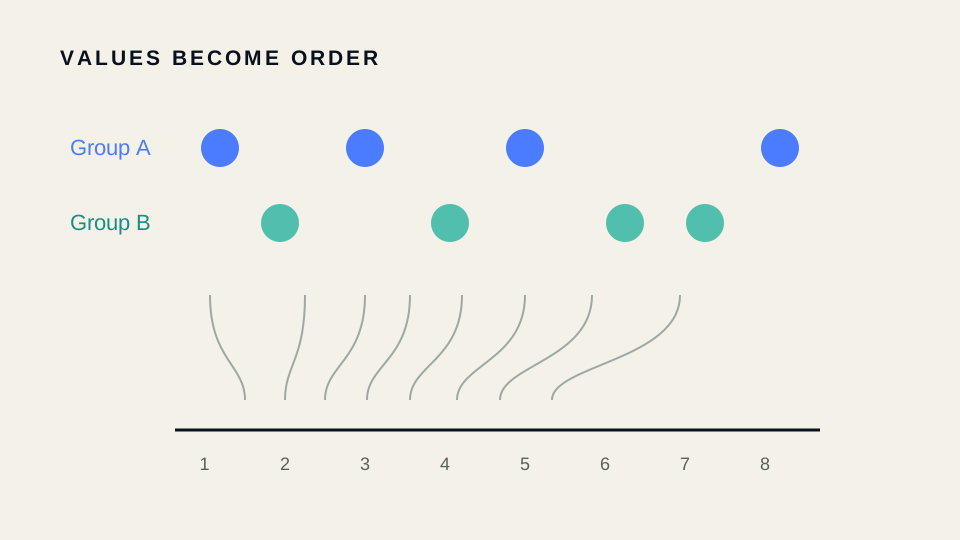
A guide to rank-based methods, permutation tests, distributional assumptions, and interpretation beyond the median myth.
Open note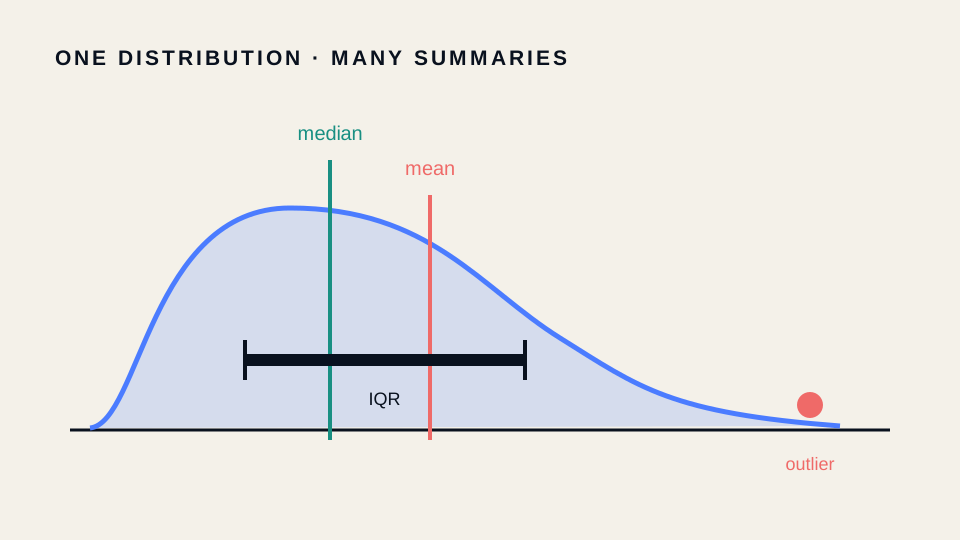
Poisson distribution: theory, interpretation, Python computation, and a scientific-imaging case study.
Open notePaired t-test: theory, interpretation, Python computation, and a scientific-imaging case study.
Open note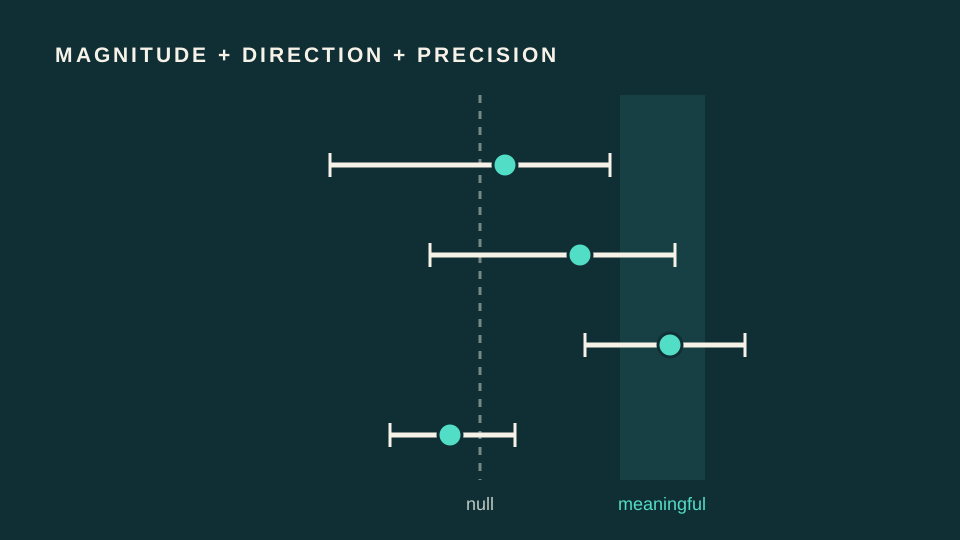
A reference-level guide to diagnostic-test meta-analysis: theory, assumptions, diagnostics, worked bioimaging analysis, exercises, and reporting.
Open noteNormal distribution: theory, interpretation, Python computation, and a scientific-imaging case study.
Open note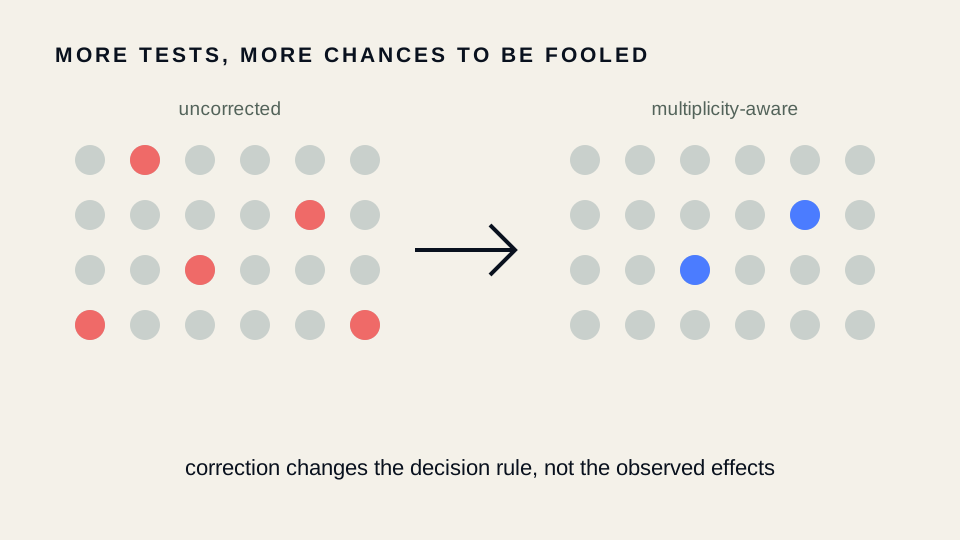
A reference-level guide to bonferroni and šidák corrections: theory, assumptions, diagnostics, worked bioimaging analysis, exercises, and reporting.
Open note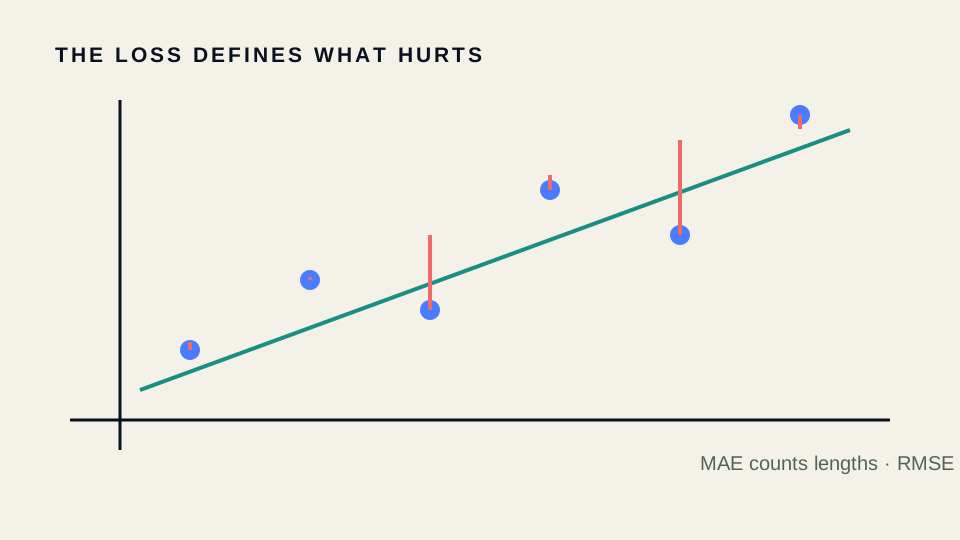
Explained variance: theory, interpretation, Python computation, and a scientific-imaging case study.
Open note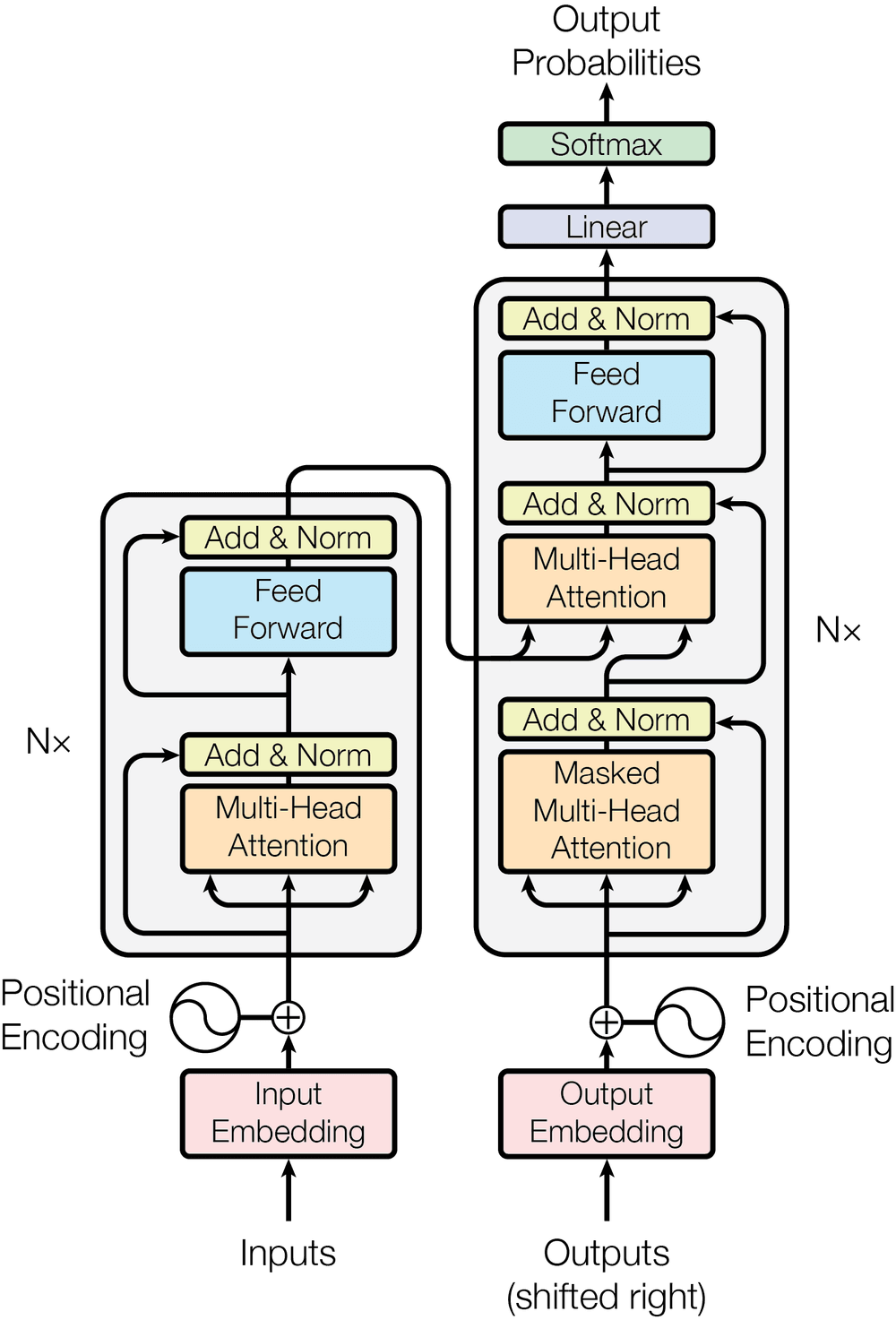
How replacing recurrence with self-attention unlocked full parallelism during training, and why nearly every model later on this timeline is built on this one mechanism.
Open noteBlog
Essays and reflections published on my WordPress blog.

Palki Sharma exemplifies the ideal journalist who transcends mere reporting by fostering public interest in complex geopolitical issues. Her work emphasizes the significance of explanatory journalism, holding power accountable and encouraging critical thinking among citizens. In essence, she inspires audiences to engage with the world beyond headlines, reinforcing the vital role of journalism in a democracy.
Read the latest article on WordPressMore from the blog

The debate surrounding India’s Foreign Contribution (Regulation) Act (FCRA) transcends politics, questioning how democracies manage foreign influence on public discourse. While some view the FCRA as essential for sovereignty, others see it as a restriction on civil society. This discourse reflects broader global concerns about protecting democratic integrity amidst external influences.
Read article on WordPress
The discussion revolves around the varying definitions and boundaries of freedom of speech in democracies like India, the United States, and France. While profanity may offend, it is not automatically obscene or illegal. Courts differentiate between bad language and legal restrictions, emphasizing that societal disapproval does not justify state punishment for speech.
Read article on WordPress
The text explores the distinction between knowledge and wisdom, arguing that while knowledge provides skills and productivity rewarded by society, wisdom influences our decisions and the quality of our lives. Though wisdom may not lead to immediate gains, it shapes our relationships and fulfillment, reminding us of the deeper values that give life meaning.
Read article on WordPress
The content reflects on the nature of presence in a world obsessed with visibility and monitoring. It discusses how true presence is about being inherently connected to one’s environment, rather than being under surveillance. Authentic character forms in unnoticed moments, emphasizing responsibility as belonging and participation instead of mere observation.
Read article on WordPress
The post explores the concept of monkhood as a method for managing attention and inner clutter amid modern distractions. It emphasizes that monkhood isn’t about withdrawal but about cultivating clarity and emotional resilience. By fostering intentional desire and detachment, individuals can engage more deeply with life while resisting fragmentation and external pressures.
Read article on WordPress
The post reflects on the disconnect between knowledge and action amidst global crises like climate change and conflict. It emphasizes the importance of aligning thoughts, words, and deeds for a coherent life, referencing concepts from Indian philosophy and modern psychology. The reflection encourages individual accountability to bridge this gap for positive change.
Read article on WordPress
In a reflective letter to 2026, the author shares lessons learned from 2025, emphasizing that true progress involves alignment rather than speed. They encourage 2026 to resist societal pressures for rapid growth and focus on depth and consistency. The letter concludes with important questions about values and patience for the future.
Read article on WordPress