Statistical note
P-values, false positives, and multiple testing
What a p-value means, common misinterpretations, and why image-rich experiments need multiplicity-aware analysis.
A p-value is the probability, under a specified null model, of obtaining a result at least as incompatible with that model as the observed result. It is not the probability that the null hypothesis is true.
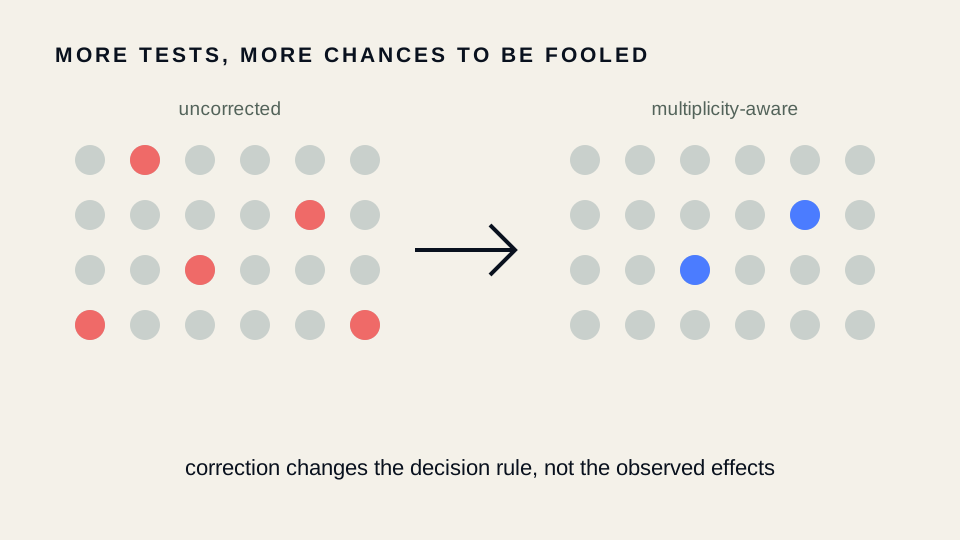
What a small p-value does not tell us
It does not measure effect size, biological importance, reproducibility, or the probability that a finding occurred by chance. It is conditional on the model, assumptions, and analysis choices.
Multiplicity grows quickly
Testing many features, time points, channels, regions, or model variants increases the opportunity for false positives. Imaging pipelines can generate thousands of candidate comparisons without making that multiplicity visually obvious.
For independent true null hypotheses tested at level , the probability of at least one false rejection is
import numpy as np
from scipy import stats

p = np.array([0.001, 0.009, 0.021, 0.08, 0.42])
adjusted = stats.false_discovery_control(p, method="bh")
print(np.c_[p, adjusted])
Common controls
Bonferroni-style procedures control the probability of at least one false positive but can be conservative. False-discovery-rate procedures such as Benjamini–Hochberg control the expected proportion of false discoveries among rejected hypotheses under stated conditions.
Better practice
Predefine primary outcomes, distinguish exploratory from confirmatory analyses, report all tested comparisons, use appropriate corrections, and emphasize effect estimates with uncertainty.
Case study: high-content microscopy
If 200 morphology features are tested across treatments, report the complete feature family and control its false-discovery rate. Splitting one experiment into many unreported analysis branches makes the effective multiplicity larger than the final table suggests.
Continue through the concepts
Related notes
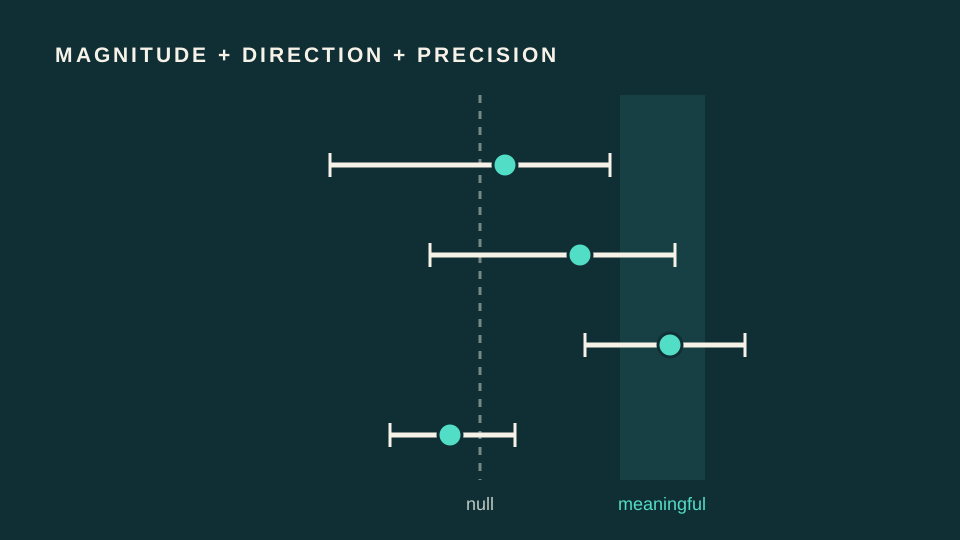 Effect sizes and confidence intervals
Moving from binary significance decisions to estimates of magnitude, direction, precision, and scientific relevance.
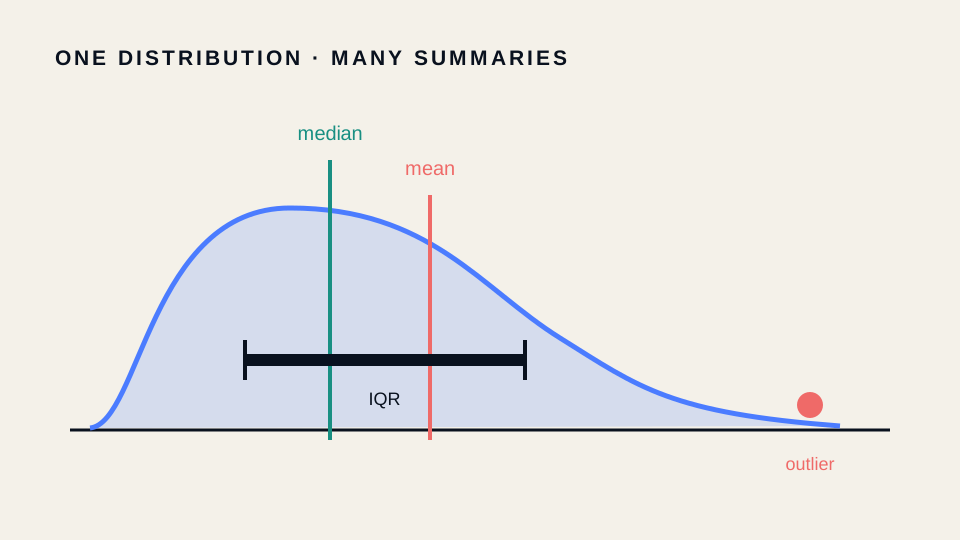 Descriptive and robust statistics with SciPy
Mean, median, variance, IQR, MAD, skewness, and kurtosis: what each summary measures and when it can mislead.
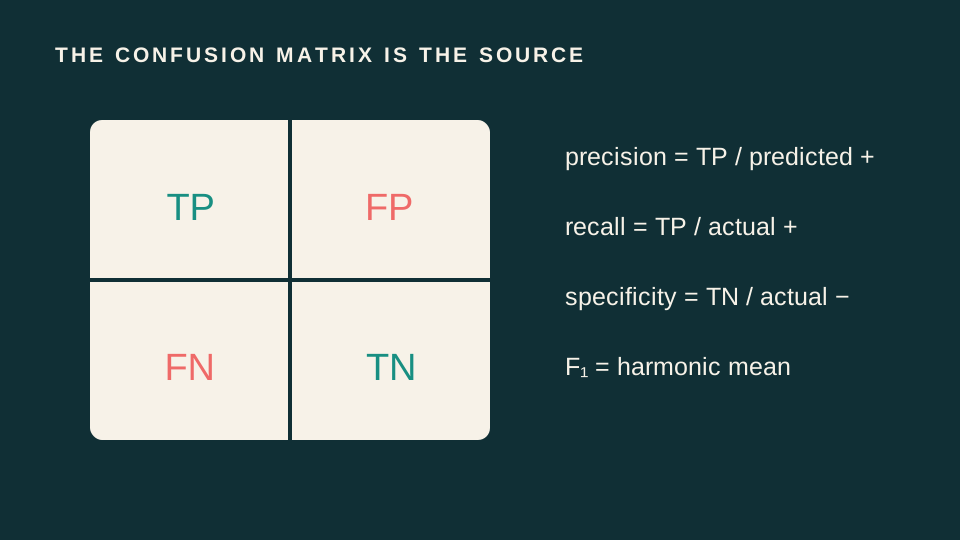 Classification metrics from the confusion matrix
Accuracy, balanced accuracy, precision, recall, specificity, F1, MCC, and choosing metrics under class imbalance.
Accuracy: the simplest classification metric, and its trapWhat accuracy actually measures, why it becomes misleading as classes grow imbalanced, and when it's still the right number to report.