Statistical note
What makes a statistical method parametric?
Understanding parameters, distributional models, assumptions, and why parametric does not simply mean normal.
A parametric method represents data using a model described by a finite set of parameters. A normal model, for example, is governed by a mean and variance. Parametric does not mean that every raw observation must look perfectly Gaussian.
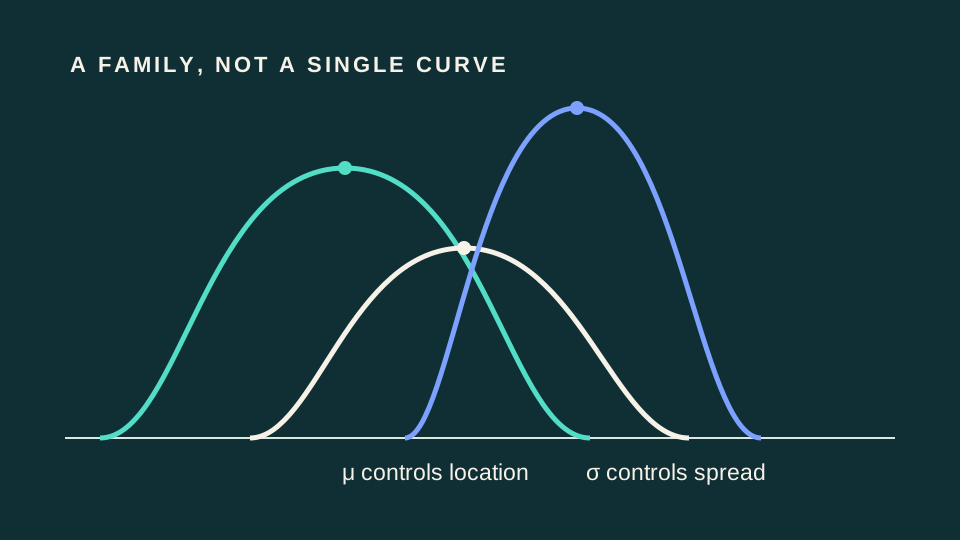
Parameters express the scientific target
The mean can represent an expected intensity, count, or response. A regression coefficient can represent an adjusted change. Variance describes dispersion. The usefulness of a parametric analysis comes from connecting such parameters to a scientific question.
For a normal model,
import numpy as np
from scipy import stats

intensity = np.array([91, 95, 97, 102, 105, 108])
mu, sigma = stats.norm.fit(intensity)
log_likelihood = np.sum(stats.norm.logpdf(intensity, loc=mu, scale=sigma))
print(mu, sigma, log_likelihood)
Assumptions belong to the model
Typical assumptions concern independence, the distribution of residuals, variance structure, and the relationship between predictors and outcomes. These should be checked at the level of the fitted model, not through a ritual normality test on every variable.
Why use parametric methods?
When the model is reasonable, parametric estimators are often efficient, interpretable, and extensible. Regression, hierarchical models, and generalized linear models can represent experimental structure more faithfully than a sequence of isolated tests.
The microscopy caution
Cells are frequently nested within images, wells, experiments, or donors. Treating all segmented objects as independent creates pseudoreplication. A hierarchical model or aggregation at the biological-replicate level may be more appropriate than a simple two-sample test.
Continue through the concepts
Related notes
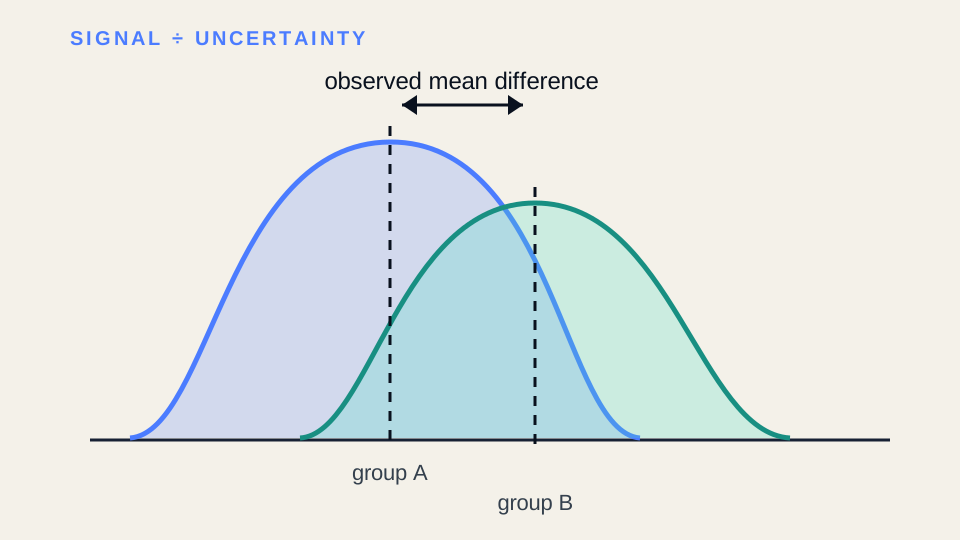 The t-test: comparing means with uncertainty
A practical guide to one-sample, paired, and independent t-tests, their assumptions, and responsible interpretation.
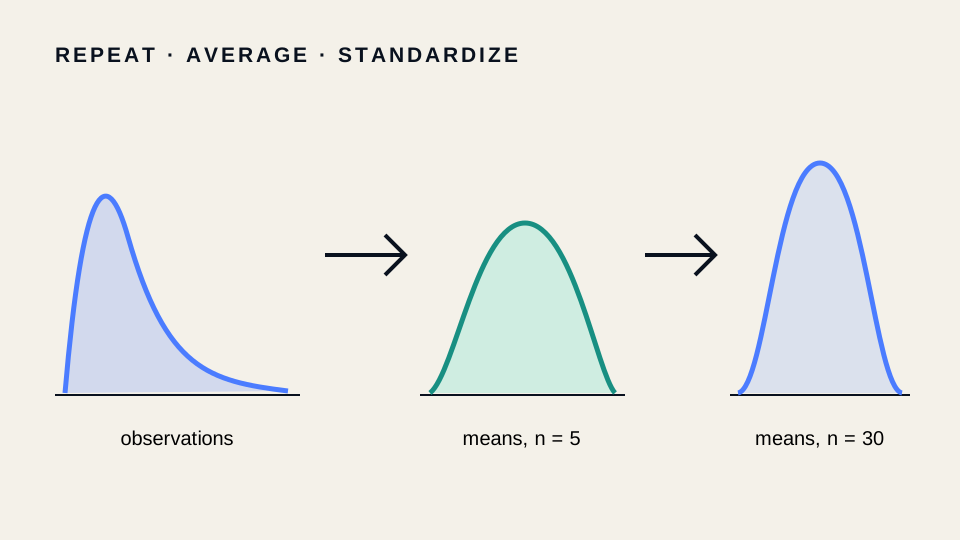 The central limit theorem: why averages become predictable
How repeated sampling makes standardized means approach a normal distribution, and where that intuition can fail.
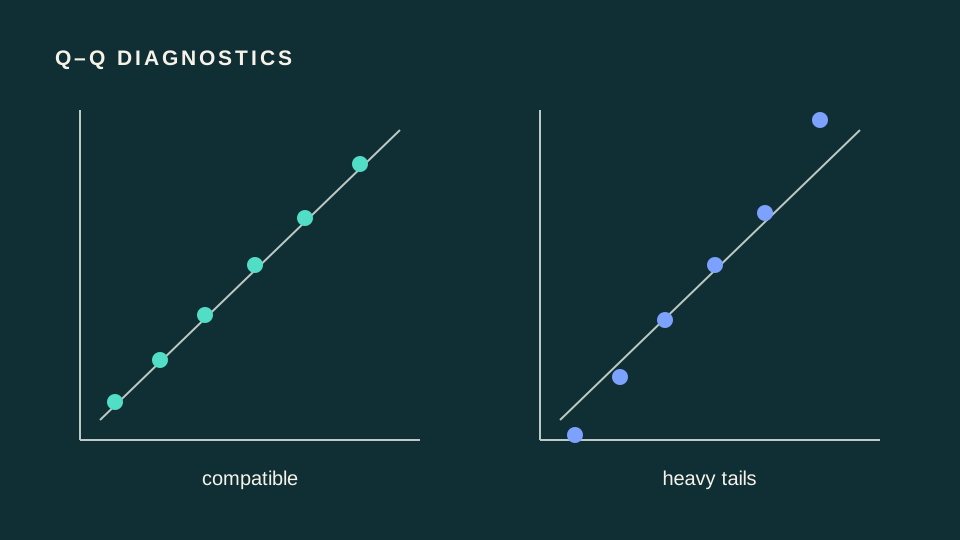 Normality and goodness-of-fit diagnostics
Shapiro–Wilk, D’Agostino–Pearson, Anderson–Darling, Q–Q thinking, and why testing normality is not a checkbox.
 Normal distribution
Normal distribution: theory, interpretation, Python computation, and a scientific-imaging case study.