Statistical note
Image-level versus cell-level inference
Match the inferential unit to treatment assignment and biological replication rather than the number of segmented objects.
How do acquisition, segmentation, hierarchy, and measurement error affect the biological conclusion drawn from images? This note turns that question into a practical analysis workflow.
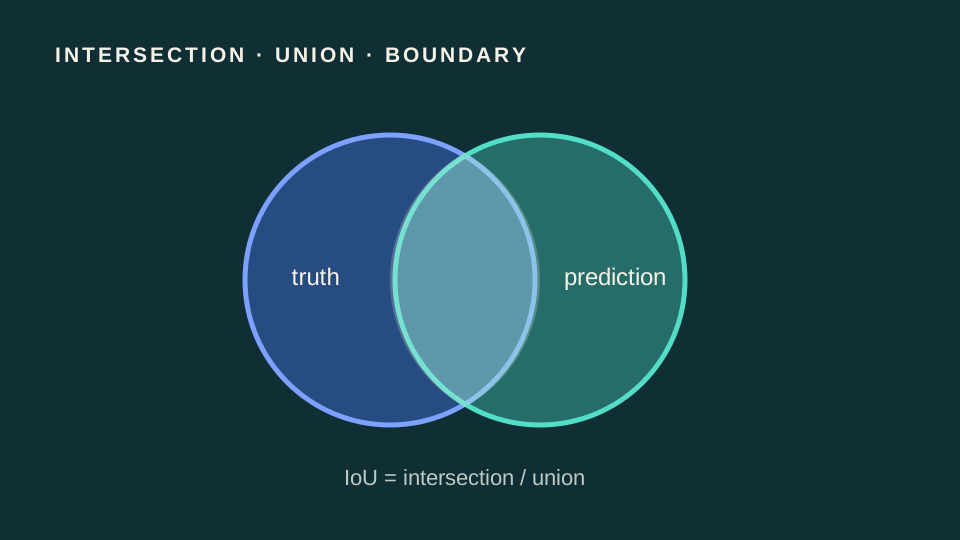
Core idea
Match the inferential unit to treatment assignment and biological replication rather than the number of segmented objects. The method is useful only when its target, data-generating assumptions, and unit of analysis match the scientific question.
The equation is a compact statement of the target; it is not a substitute for checking design and data quality. State what each observation represents, how it entered the sample, and which sources of dependence remain.
Practical workflow
- Write the scientific question and estimand in one sentence.
- Identify biological units, technical replicates, nesting, repeated measurements, and exclusions.
- Visualise raw observations and group structure before fitting the method.
- Check assumptions using design knowledge, diagnostic plots, and sensitivity analyses.
- Report the estimate, uncertainty, effect magnitude, sample sizes at every level, and limitations.
import numpy as np

# Aggregate cells within fields, then fields within biological replicates.
cell_measurements = np.array([[4.1, 4.3, 4.0], [5.2, 5.0, 5.1]])
field_means = cell_measurements.mean(axis=1)
print({'field_means': field_means, 'grand_mean': field_means.mean()})
Interpretation and failure modes
Do not read a software output as an automatic scientific conclusion. Ask whether dependence was modeled, whether preprocessing used information from validation data, whether missingness or selection is informative, and whether the reported uncertainty covers every level of sampling. Prefer estimates and intervals to threshold-only language.
Microscopy case study
Summarise or model the hierarchy when treatment is assigned to wells but outcomes are extracted from thousands of cells.
Connections
Use the tags above to continue to notes on design, assumptions, uncertainty, diagnostics, and complementary methods. A robust analysis normally combines several concepts rather than selecting one test in isolation.
Continue through the concepts
Related notes
Batch effects and harmonizationSeparate biological differences from acquisition-day, instrument, staining, or processing shifts without erasing real biology.
Measurement error propagation: your final number is a chain of estimatesEvery derived measurement carries the uncertainty of everything that fed into it — calibration, segmentation, background. Propagation is how you compute the combined uncertainty instead of ignoring it.
Evaluating object detection: matching, not just countingWhy detection and counting metrics live or die on the matching rule between predictions and ground truth — and how duplicate detections and missed objects distort the count.
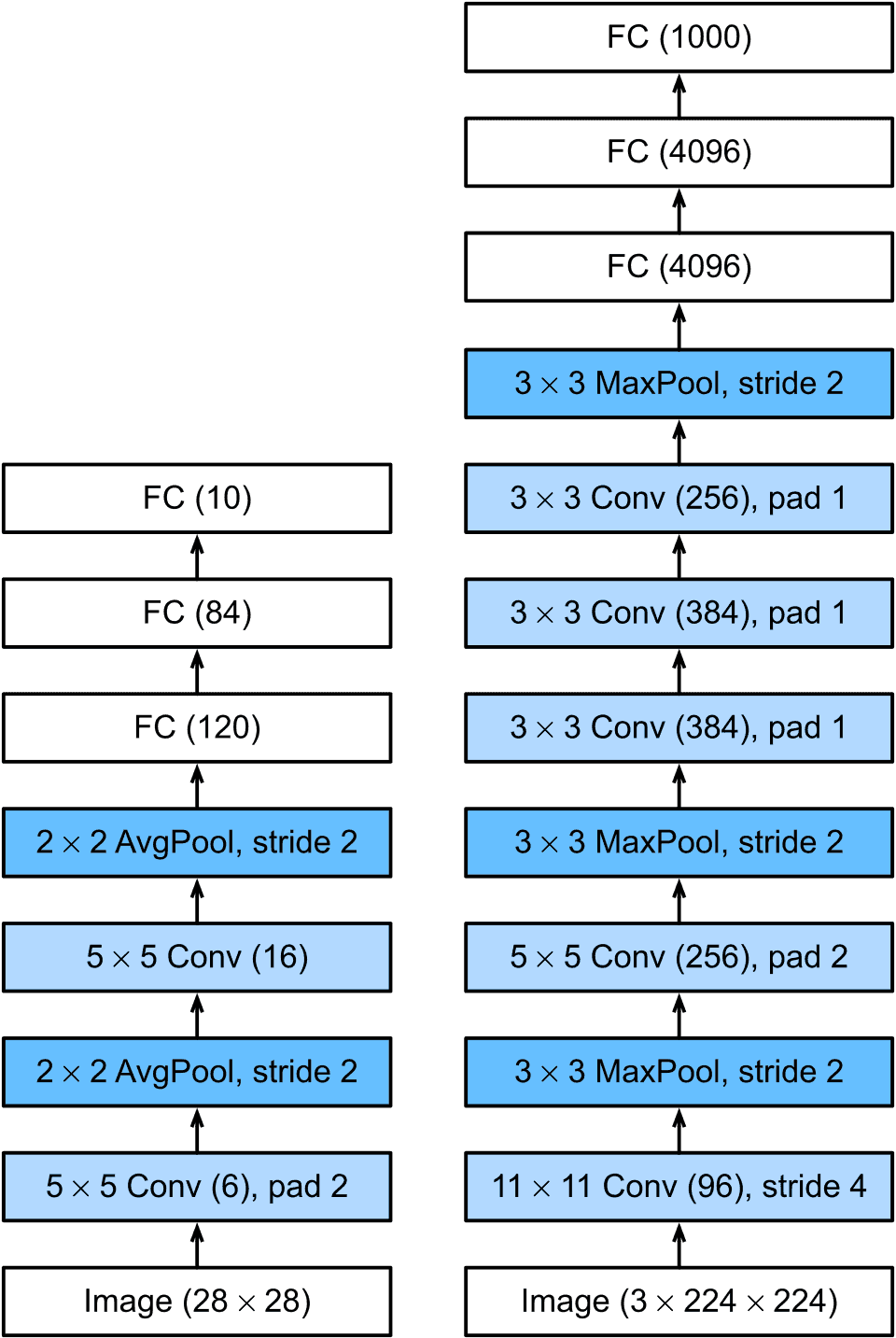 AlexNet: the result that ended the debate about deep learning
How a convolutional network trained on two GPUs cut ImageNet error by a margin large enough to reset computer vision, and why every microscopy segmentation model on this site descends from it.